Stephen Simms

Information Processing Theory
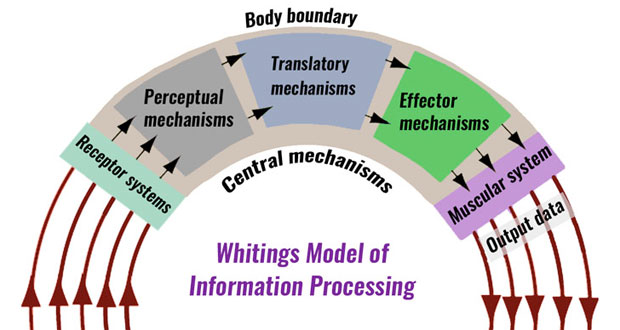
Information processing models

The section will look at various information processing models from the basic model to the Whitings model. Also covered are Hicks Law, factors affecting Reaction time, the Single Channel Hypothesis, and the Psychological Refractory Period. When we are performing a skill, many decisions must be made. For example, if making an overhead clear in badminton,

Information Processing Theory Read More »

Teaching Methods

This section looks at the different methods used in teaching and varying ways of practicing a new skill (Equivalent to UK A Level Physical Education) Teaching Methods During lessons and training sessions, the teacher or coach must provide guidance to the athletes to ensure they learn effectively. To do this the demonstration and practice of

Teaching Methods Read More »

Transfer Of Learning

Transfer of learning

This section looks at the different forms of transfer. Practical examples of their uses are also included. (Equivalent to UK A Level Physical Education) Learning or regularly performing a skill can affect, either positively or negatively, the learning of a second skill. Positive Transfer This usually occurs when the two skills in question are similar in some

Transfer Of Learning Read More »

Ability & Skill

ability and skill

This section describes the difference between abilities and skills, skill continuums, and their uses in a practical context. Abilities Your ability is the skills and qualities which make it possible for you to achieve a task. These are stable and enduring characteristics that are genetic and can be either completely perceptual, completely motor, or a

Ability & Skill Read More »

Phases Of Learning

phases of learning

This section looks at the three stages of learner and descriptions of the tasks performers are expected to do at each stage. (Equivalent to UK A Level Physical Education). “Learning may be considered to be the more or less permanent change in performance associated with experience” Knapp (1973) Three stages of learning have been identified: Cognitive

Phases Of Learning Read More »

Motor Programs & Schema Theory

motor programs & schema theory

Motor Programmes Motor Programme: A series of subroutines organized into the correct sequence to perform a movement. Stored in the long-term memory, retrieved when we need to perform the skill. For example, The motor programme for a cricket shot stores the subroutines in the correct order (stance, grip, foot placement, backswing, and follow-through). Motor programmes

Motor Programs & Schema Theory Read More »

Scroll to Top